
Figuring out fulfillment logistics and giving away free games!
In my previous post, I’ve described how I’ve adopted the Agile development methodology to keep my focused and maintain my productivity as I churn through all the tasks needed to launch a successful Kickstarter campaign and start my publishing journey.
All of a sudden my end of January Kickstarter launch date is just around the corner! I used some of that panic to prioritize figuring out a fulfillment plan. I also launched my Quickdraw design challenge to drive some engagement and hand out some free copies of the game.

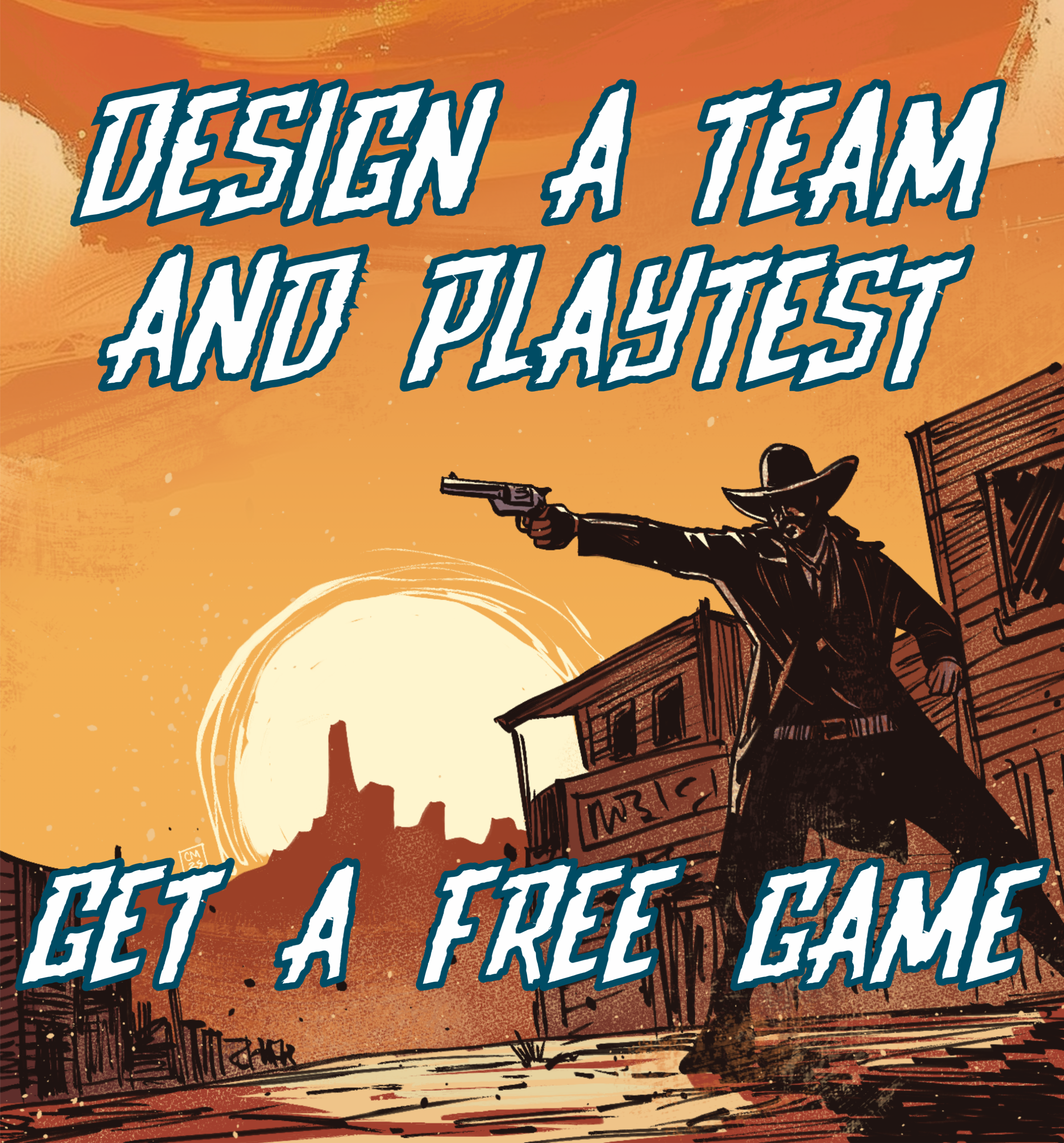
- Launch Discord design challenge: On my RAM Games Discord server I launched the Quickdraw design challenge. If someone designs their own team and playtests someone else’s, I will ship them a free copy of the game. I also included that if a design is really interesting I would work with the designer to publish theirs as an official version along with sharing profits and designer credit. I think that a strong engaged community would be so helpful and fun for this game, so I’m happy to kickstart (lowercase) that with some free copies of the game.
- Post Aliens vs Marshmallow set, Noir placeholder: To add another example for the design challenge and to get down my idea for the next set, I made a first cut at Aliens vs Marshmallows and posted that for people to give feedback on. I also put down a Noir set placeholder to help widen people’s thoughts.
- Monthly email Design challenge: With the Discord set, I sent my monthly email out and included the design challenge. I got 10 people within a day to join the Discord (2 then dipped out). Now I’m trying to keep that momentum.
- Figure out fulfillment plan: For those not familiar with how a board game ends up in your hands, it goes 1) manufacture bulk order, 2) ship bulk order to fulfillment owner, 3) distribute to individual customers. That fulfillment owner can be you in your garage, or it can be a dedicated partner who will repackage and ship your game nationally, or globally, to your backers.
Fulfillment partners make it easy, but come with a cost of usually a couple hundred dollars plus a percentage of each package shipped. My game is very simple and small, so I was deciding whether to go the fulfillment partner route, or do it myself. I brought this up at my monthly Break My Game Self-Publishing Roundtable (come join us!) and was given the advice that I should see how big the Kickstarter is before making the decision. If I end up with 100 backer then it’s doable on my own, if I end up with 1000 then maybe I’d want to pay for some help.
I want to stay flexible but deliver on a quick turn around time to my backers. Therefore, I am proactively talking with fulfillment partners to get quotes and have contacts so if I do decide to go with a fulfillment partner it will be quick to turn on. - Decide on EU/UK plan: As I discussed at length in my EU/UK article, there are a lot of requirements and costs associated with shipping to the EU/UK, and different ways to do it. The ideal way is to work with a fulfillment partner who can handle VAT (consumer taxes) for you, but like we just talked about, that comes with a not insignificant price tag. And thanks to Brexit it’s now double if you want to handle EU and the UK. So, consistent to my fulfillment decision, I’m waiting to see how many EU/UK backers I have before deciding for sure. However, unless the Kickstarter vastly exceeds my expectations, I doubt there will be enough EU/UK backers for this small cheap game to rationalize paying for a fulfillment partner. I will therefore be upfront with any EU/UK backers that they are going to end up getting billed for VAT through their carrier – which is not ideal, but shouldn’t be completely foreign to them either.
- Pick Authorized Representative: Again as discussed in my EU/UK article, separate from fulfillment, you also need an Authorized Representative to ship to the EU. This entity’s address has to be on your label, meaning you need to have the info ready before your final game print run. I looked around a lot to find a reasonable one, and I believe I’m going to land on Easecert, due to their one-time fee structure. I’ll be chatting with them and will report back if anything changes that decision.
- Final reviewer plan: I’ve been dancing around my reviewer plan for a little, since I know my Kickstarter needs reviewers, but also recognize that reviews aren’t going to bring anyone new to my game. I engaged a few a while ago and teed them up to do their reviews in the January timeframe. I went back and forth on if I should find more, but due to the value prop and timeline, I’m officially deciding to stick with those I’ve already engaged and I get what I get.
- Decide on deluxe tier: It costs money to gain customers, that’s just a fact of marketing. Therefore if you can increase the average spend of your customers your paid marketing becomes more cost-effective. In Kickstarter world this is done via deluxe tier offerings. With my tiny wallet game and 1000 MOQ, adding components to a deluxe tier can be tricky for cost and logistics. I decided that the best part of my game to deluxify is the art. So I’m making a deluxe tier that will include a playmat, and art prints. They are gorgeous and may attract a few eyes that value this type of art.
- Design a playmat: Since all of my art is portrait style for the cards, most aren’t usable for landscape playmats. I considered commissioning some playmat art, but not knowing how many people would be interested in buying a playmat that’ll cost more than the game they’re buying, I didn’t think that was worth it. Kickstarting a new game with a new audience is full of all of these unknowns. Luckily, looking at the rule book art I decided to buy I realized cropping that makes for a beautiful playmat!
